By Peter Rao ’24
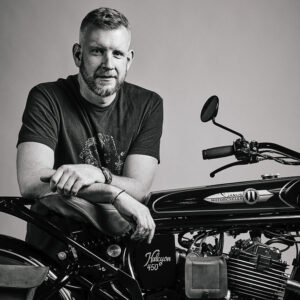
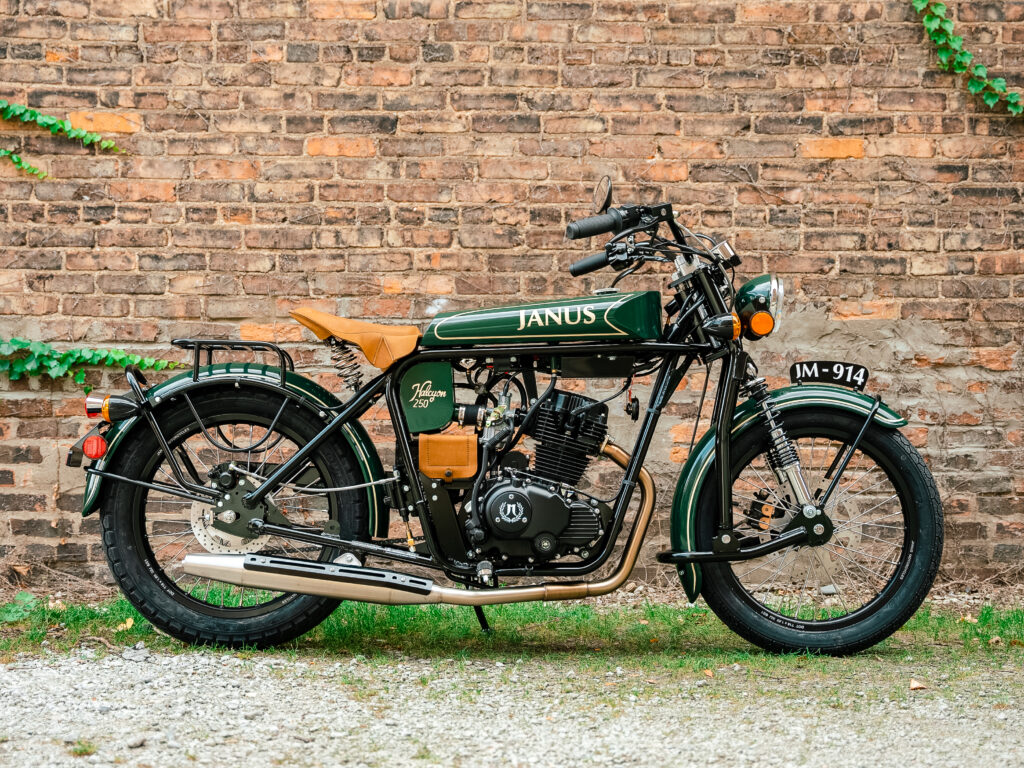
Just four years after graduating, Richard Worsham ’07 helped found Janus Motorcycles—a motorcycle manufacturer based in Goshen, IN that emphasizes a smaller, more lightweight build that places riders in “a closer connection with their machine, the road, and the passing landscape.” In an interview, Mr. Worsham shares his thoughts on writing his first book, The Rambler’s Companion: Or the Art, Practice, & Enjoyment of Lightweight Motorcycling, in which he develops his ideas on the philosophy that fuels his company’s vision.
 What made you want to write this book? What problems do you think it addresses?
My primary reason for writing The Rambler’s Companion was to organize my thoughts on why I have found lighter-weight, classic motorcycles so appealing, and indeed, transformative; why my company, Janus Motorcycles, has chosen to build motorcycles that are so different from anything else on the market; and why our customers have found them attractive. In this sense, it was an attempt to define a different category—not just of motorcycling, but of interaction with the world. In the book, I compare this transformative experience with that of sailing, using a mechanical watch, or the simple act of walking (such as the “rambling” clubs of Great Britain, where to ramble means to walk for the joy of walking as well as to maintain the paths that the activity requires).
Motorcycles in general have a unique ability to place the rider in a more immediate relationship with the passing scenery, thrusting him into contact with the elements, with strangers, and yes, with a certain accompanying element of danger. Yet as any rider will tell you, this immediacy, this visceral connection is well worth the manageable risk. My thesis is that this transformative immediacy of the motorcycle is not a product of the latest technology and its driving force of safety and efficiency. In fact, it stands in stark contrast to it, leaving the motorcycle as quite possibly the only “machine” that can actually elevate the human experience.
Traction control, “infotainment,” and all the electronic aids, gadgets, additional horsepower, and weight that have overtaken the modern vehicle are not the real reasons why we ride motorcycles. These features are the parlance of the technological appliance driving toward a future we have no control over. We ride because the motorcycle provides a means of exercising our uniquely human agency to move through the world on our own. It allows us to be freed from the practical constraints of safety and efficiency and to take full responsibility for our actions.
Could you speak a little about your process in writing the book?
The actual writing process mostly involved short essays on a variety of topics that I had been working on for about a year or so and then codified into the book. Most of the time was spent in formatting, illustrating, designing the cover, and in the final edits for publishing.
How did your time at TMC influence you in your writing?
I am sure my education at Thomas More College has had even more of an effect on me than I am aware. Josef Pieper and Richard Wilbur make appearances and a certain contrary approach could be attributed to my time at TMC. While I do not mention Jacques Ellul or Ivan Illich directly in the book and did not study them during my time at TMC, my education certainly primed me to be ready for them later in life. The kind of conspiracy to which Dr. Sampo enjoined his students is something that I strive to continue.
For further reading:
From Literature to Motorcycles: An Interview with Richard Worsham ’07
How TMC Prepared Me for Grad School: An Interview with Esther Jermann ’20