By Brendan McDonald ’25
Throughout the fall semester, the Thomas More College Players prepared their interpretation of Shakespeare’s comedy, Twelfth Night. The curtain was pulled back the week before Thanksgiving break for a double showing of their work.
The play’s premise involves a shipwrecked girl landing on the fictional island of Illyria, thinking that her lookalike brother is dead. She enters the service of a duke—dressed as a man—to help him woo a countess. Hilarious love triangles ensue.
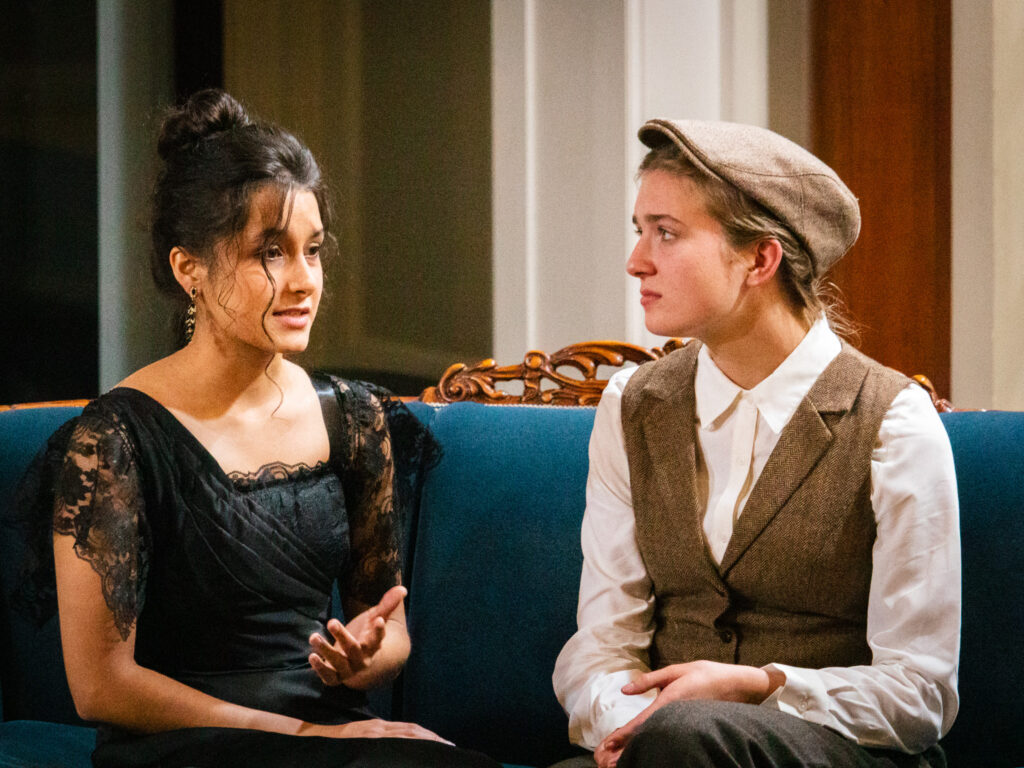
Director Peter Shanley ’25 and co-director Jacinta Sigaud ’26 oversaw the preparations, which began in mid-September. This is Mr. Shanley’s second time directing a Thomas More College play, leading the production of Patrick Hamilton’s Rope last year.
For Sam Matt ’27—who played the servant Malvolio in Twelfth Night, and who also appeared in Rope—working with Mr. Shanley harnessed his ability as an actor and further developed his love of Shakespeare. “The best piece of advice I took from him was that it is almost better to over-act—to pull out all the stops—than to be timid or let my fear of not remembering a line diminish the quality of my acting,” Mr. Matt explained.
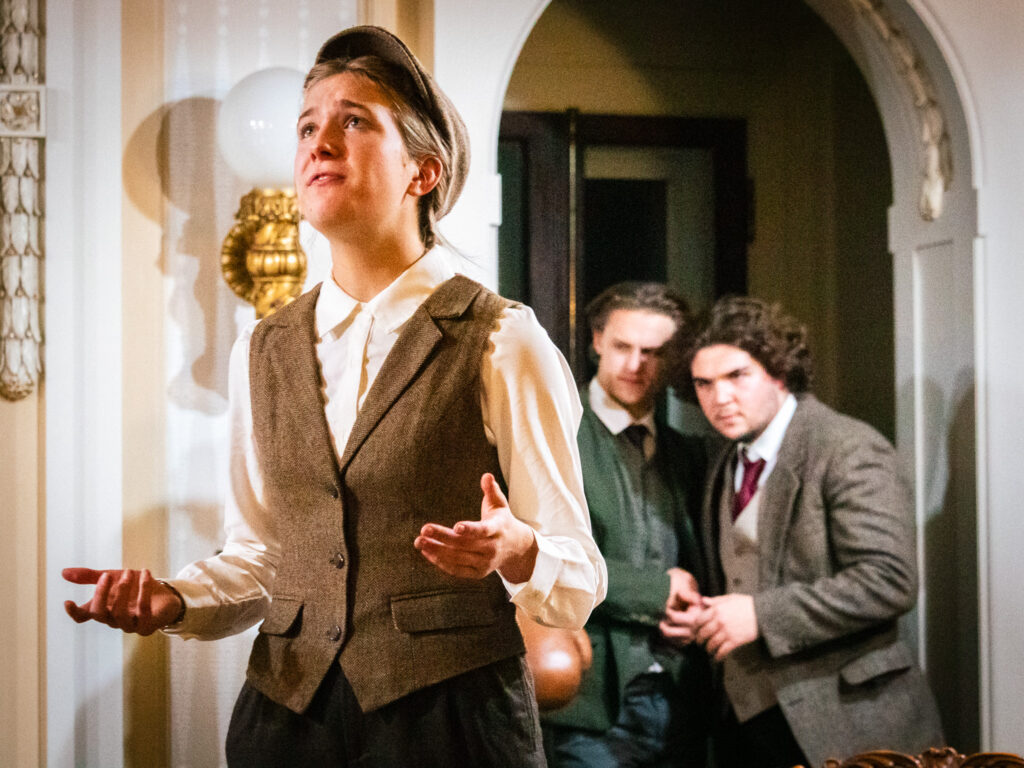
Caroline Staudt ’28, who played the shipwrecked and disguised Viola, echoed a similar sentiment about working with Mr. Shanley. “Peter was a very fun director,” she said, “and I found that, as a cast, we had a lot of freedom to suggest comedic bits and to truly make the play a ‘play’—something extraordinarily expressive.”
One thing the audience could easily discern during the performances was the actors’ chemistry with one another. Mr. Matt found that developing that chemistry resulted from natural friendships with the rest of the cast—despite their portrayed enmity onstage. “It was a joy to work with my peers on capturing the moods of these interactions—our friendships directly influenced the force and believability of these absurd, nuanced relationships, which would have been unnatural and awkward had I not known and trusted them so well,” he said.

Despite occasional frustrations, “the cast grew into a big family, and it was a gift to perform together,” Miss Staudt noted.
Mr. Matt has performed in plays before, including last year’s Rope and an appearance alongside Miss Staudt in a TMC Great Books Summer Program production of Much Ado About Nothing. This year’s show, however, exceeded his expectations. “Before performing in Twelfth Night, I had regarded these two TMC plays as the most difficult, professional, and polished productions I had since been in,” Mr. Matt said. “The experience of acting in Twelfth Night far surpassed both of these plays and my expectations of its quality.”
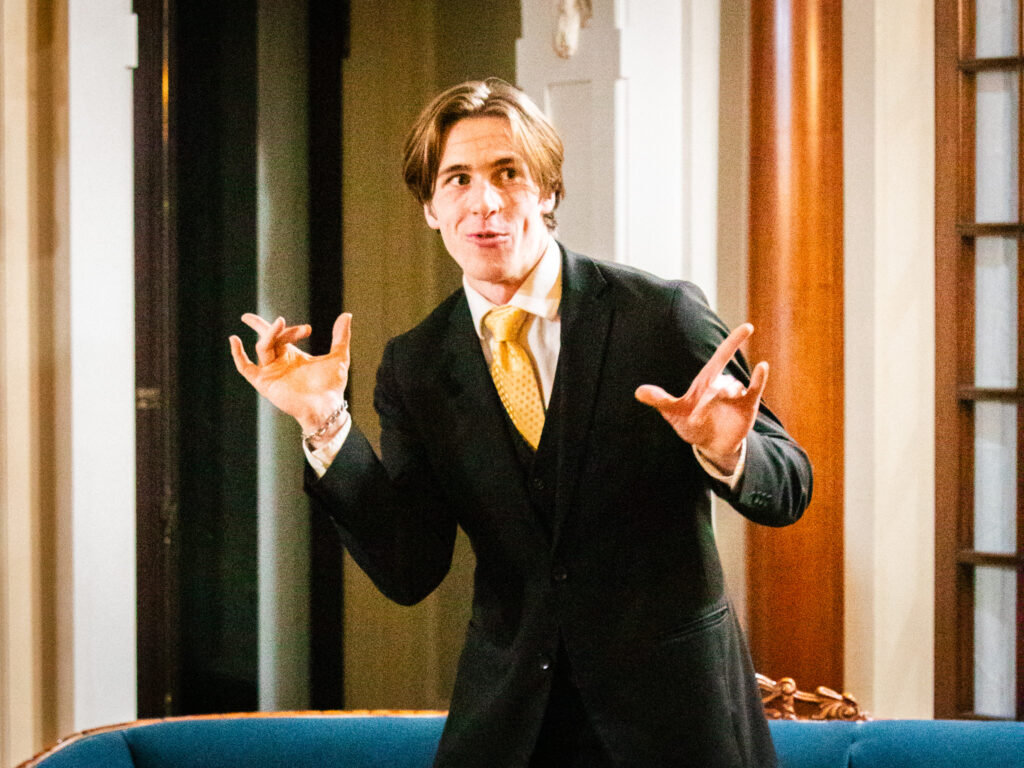
Part of what contributed to that quality was the effort required to develop the characters on the stage. For Mr. Matt in particular, that meant shaping Malvolio’s facial expressions, which depict a “seemingly stark, simple exterior but a complex, tortured interior.” The result is a servant with slightly raised eyebrows, a jutted chin, and pursed lips—in short, a somewhat composed look communicating self-approval and smugness. Throughout the play, the smugness occasionally bursts into rage. The TMC sophomore found that the look naturally developed from his lines, especially while practicing with other cast members. “It was delightful to take a dive into Shakespeare’s mind by interpreting his creation of Malvolio’s complex psyche using a wide spectrum of facial expressions, which ranged anywhere from blind rage to coy delight,” Mr. Matt remarked.
In addition to Much Ado About Nothing, Miss Staudt has also performed in other Shakespeare plays, including appearances as Helena in A Midsummer Night’s Dream, Brutus in Julius Caesar, and Hermione in A Winter’s Tale. As a result, Miss Staudt did not find the Shakespearean language challenging. Memorization and blocking brought their own hurdles, however. “I can’t put down a number for how many strolls I took through the forest path on campus,” Miss Staudt observed. “I found myself subscribing to what I like to call the ‘Fraser Method,’ as any Latin student or Folk Guild member would know—essentially just saying aloud the first line a few times, then the second, then putting them together. It works!”
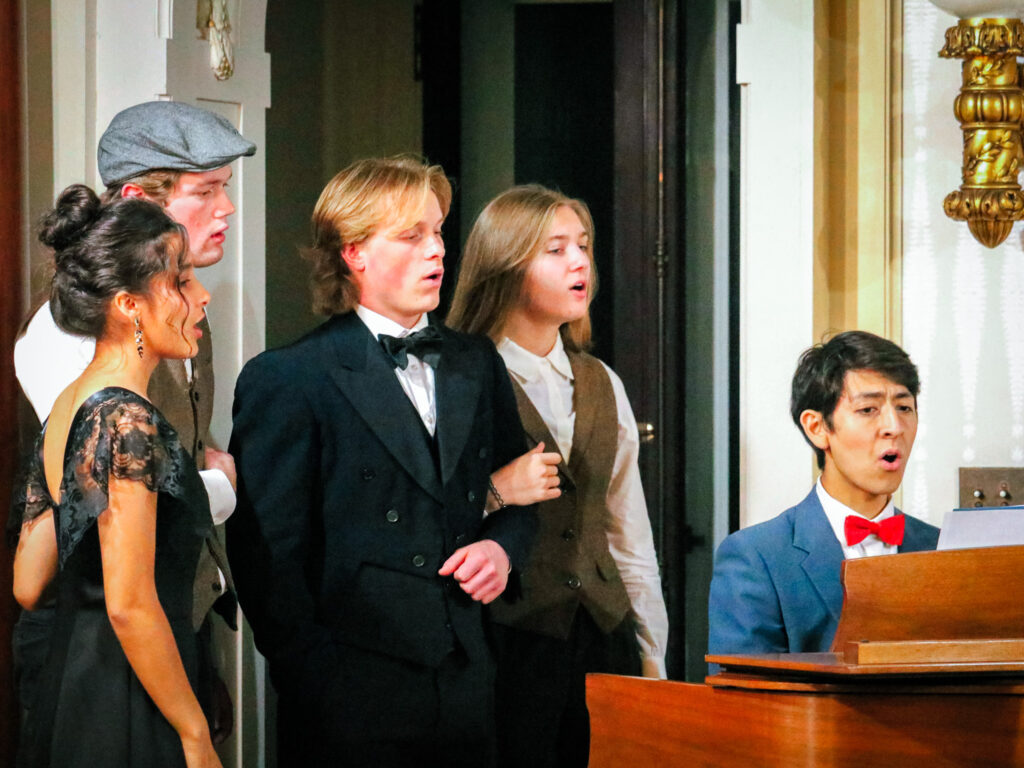
The live performance brings everything together—something which, according to Miss Staudt, is impossible to replicate. “Ultimately, there’s a piece of acting that is unavailable to me until there’s an audience watching,” she said. “Theater is made to be watched, and the excitement and energy an audience brings boosts any performance.”
For further reading:
The Thomas More College Players Present Shakespeare’s As You Like It