“During this selection and transition process TMC’s Board of Trustees committed itself, everyone, to participation and discernment. With the successful outcome of this process TMC’s Board of Trustees is stronger than ever and looks forward to the next challenge.” –Michael Gilleran, Chairman of the Board of Trustees, Thomas More College of Liberal Arts
When most people hear of elections, they think of partisan intrigue, smoke-filled rooms, deals between parties, and older presidents who allow a debate to run only to bring out of the shadows a pre-anointed successor. This is not the way of Thomas More College.
“The whole thing began and ended in friendship and prayer,” reflected outgoing President William Fahey. “In the summer of 2024, about two years before my contract term concluded, I began to pray intensely, discussed with my wife my inclination to step aside from the presidency, and then broached the matter with Chairman Michael Gilleran. We met regularly for a year and each time he would ask—more as a friend and counselor—how things stood. Inclination turned to intention and intention to decision.” Once Dr. Fahey had expressed his resolve, Mr. Gilleran called for a meeting of the Trustee officers with President Fahey to assess the situation and timing. Everyone was in agreement: the College had arrived at the right moment for this development.
In July and August 2025, first the Executive Committee and then the entire Board of Trustees considered all the options for a search and even new constitutional models for how the College could operate. In September, the Board held its annual retreat and made a careful review of the Bylaws and statutes that govern the College. In tandem with a discussion of the Strategic Plan, Chairman Gilleran facilitated a SWOT analysis (strengths, weakness, opportunities, threats) in light of the coming changes. The presidential transition marked a time for institutional soul-searching.

“The difficult question arose at this time,” remarked President Fahey, “of whether or not to retain a consulting firm.” Most colleges use outside firms to generate lists of candidates, publicize the opening position, vet prospects, and orchestrate the process of discernment for an institution. “Our Board considered the possibility, but in the end, it struck us all as contrary to the fellowship that exists among the Trustees and their strong sense of obligation and community. Something so important couldn’t be farmed out to a third party.” Initially, Chairman Gilleran had designed a number of subcommittees to accomplish the work of the search, but as he called for volunteers he was faced with the happy reality that the entire Board was willing to shoulder the burden. The Trustees committed to monthly meetings, which became more frequent as the work intensified, and for the key officers weekly and even daily. “We had to maintain absolute secrecy about the particulars,” elaborated Dr. Fahey, “But my recurring message to the faculty and staff was that I had complete trust in what was unfolding and that everyone needed to keep in mind that our Trustees were fully engaged in their careers and families; patience would be needed and not much could be said up front. I was moved deeply by the sacrifices, especially in terms of time, that my fellow Trustees were making to do the right thing.”
After the September retreat, the Trustees prayed a Novena from the Vigil of the Feast of St. Michael to the Feast of Our Lady of Victory and consecrated the presidential search to their protection.
By mid-October, the Trustees had identified fourteen prospective candidates and assigned teams to reach out to these individuals for initial interviews. In tandem, President Fahey solicited the perspectives of key friends and donors of the College, confidentially sharing his plans and asking their counsel. During this time, Mr. Gilleran also worked out a policy of “stability,” as he called it—sincere measures to communicate to the faculty, staff, and students that the Trustees intended to support the teachers and staff who had worked so hard to build up the College. The aim of “stability” was to preserve the achievements—and especially the character—of the College. Trustee Michael Mulski gathered the ideas and perspectives of his fellow Trustees and created what would become the essential template for interviews—both of candidates, but also of the students, alumni, staff, and faculty of the College.
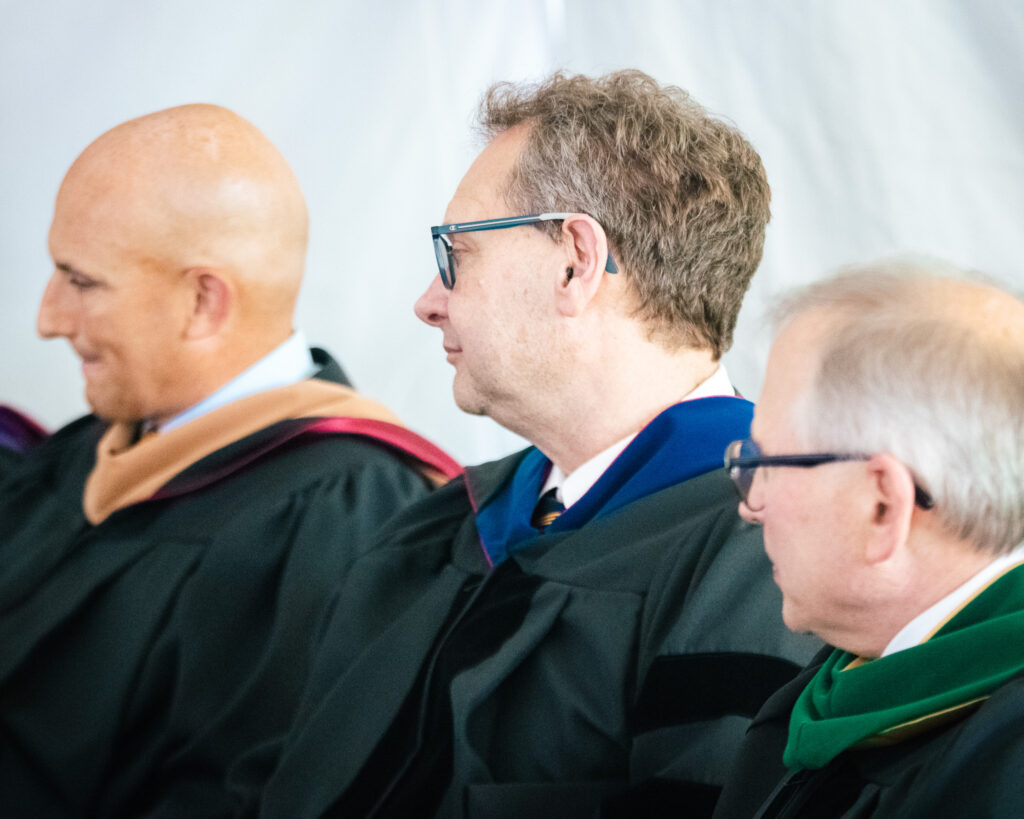
“We all recognized the awesome responsibility of selecting a successor to William,” reflected Dr. Mulski. “That said, our proceedings unfolded in a spirit of joy and collegiality. I enjoyed gathering information from faculty, staff, students, interviewing potential prospects, and engaging with fellow Board members. All these interactions fostered a deep respect for the faculty and staff, greater love of the students, a recognition of the talents of fellow Board members, and a strengthening of our relationships. Reflecting on these six months, I am profoundly grateful for the privilege of being associated with this college.”
That deepening love of the College was noted poetically by Trustee Bill McCarthy: “In some respects, Thomas More College is a bit like Brigadoon. It is a magical, musical place that time has forgotten. It is a place of wild wonder, a place where the heart swells in joyful affection and rhapsody. It is the preeminent American Catholic College of letters. The aching modern world needs more of such places. Our desire to protect it was enkindled.”
When November came and the search was under full sail, the College entered the most intense moments of its ten-year “comprehensive” review by its accreditation agency, the New England Commission of Higher Education. “For much of the Fall, it felt like we had three or four jobs,” noted Dr. Fahey, “but everyone kept at it, joking, mocking one another, having meals together, getting in fraternal arguments—but never quarrels. It was intense, but grace-filled.”

The Trustees again conducted a careful review of the concluding Strategic Plan and solicited comments from the College’s Strategic Council on future intentions and desires. From this and its own assessment the Board crafted and voted upon a set of “strategic priorities” that would be presented to each candidate during interviews. “This was done to avoid the absurd situation of a new president being thrown the keys without an operating manual or clear sense of where the Trustees intended the College to go,” observed Chairman Emeritus Pat Monaghan. “That ends badly.”
Through November and December, the Trustees and the College faculty and leadership interviewed leading prospects. Pairs of Trustees also visited campus for classes, meals, and Mass while continuing interviews and listening sessions. Opportunities were carefully created for the confidential collection of concerns and perspectives. The Board also reflected on the clear, but somewhat spare description in the Bylaws of how a president is to be elected, and they unanimously voted to amend the Bylaws to require a 2/3 majority for a presidential election. “I jested that we should also require that the Trustees be locked up in a simple residence with austere food,” remembered Dr. Fahey. By the time of its December meeting on the Feast of Our Lady of Guadalupe, it had narrowed all the prospects down to three candidates.
In preparation for its January meeting, President Fahey submitted a written reflection on the qualities of a president, the burdens and blessings of the office, and his general thoughts on what the College could look like under the leadership of each of the three prospects. “I thought the Board had a set of excellent candidates,” explained Dr. Fahey. “I saw my role as to provide an imaginary but informed vision of the three possible futures. Of course, I had forgotten that half of our Board is filled with lawyers, so a fairly serious cross examination followed my utopian presentations.” At the end of the January meeting, Dr. Fahey was authorized to take all requisite actions to ensure that the finalists would each have an opportunity to demonstrate a desire and a capacity to lead the College. In the meantime, the Trustees would continue their ongoing internal discussions and reviews.
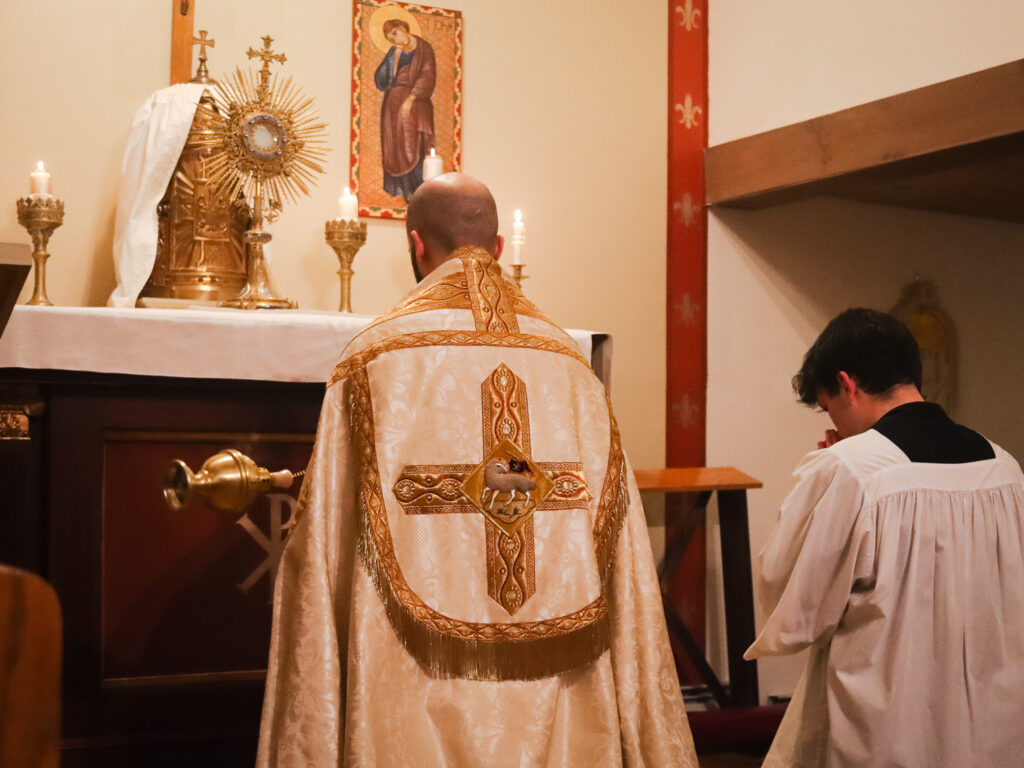
President Fahey called for the student body to pray continuously for the Trustees and their discernment, from the birthday of St. Thomas More (February 7th) until the Feast of St. George (April 23rd). This complemented Dean Kitzinger’s request to the College chaplains that the intention for a good presidential transition be mentioned explicitly in the prayers of the faithful at every Mass on campus. By the second week of February, things had reached the critical moment. “There were many contingent factors emerging—providential really—that helped sharpen the Board’s judgment,” Dr. Fahey noted. “I would say by early February, without having to speak about it, you could tell the consensus was settling on one man.” Mr. Gilleran foresaw that a series of meetings would be needed to allow a final careful review, and he gave notice to the Board. The time had arrived.
“The task of selecting a fourth President for the College was daunting,” stated Trustee Ryan McKenna ’11, “but the Board’s hard work over many months crystallized into an unmistakable clarity and confidence that we had a finalist who was the right fit. We certainly felt the weight of needing to select a leader who would preserve the College’s hard-earned reputation as a small but elite fighting force in the Catholic liberal arts.” Leading up to the meetings, Mr. Gilleran and Dr. Fahey assessed the remaining candidates and Mr. Gilleran decided to conduct another round of interviews.
On February 17th (Shrove Tuesday), the Trustees entered into their most significant formal discussion. The Bylaws were reviewed and discussion ensued over the strict observance of the College constitution. Then Chairman Gilleran and President Fahey gave updates on all candidates and further perspectives on the decision that was before the Board. Formally, the Board considered, debated, and voted on three matters:
- A resolution that the search effort had been conducted in a satisfactory way and had reached the point of cessation.
- A resolution that it was not desired to pursue any other strategy for selecting a president or to delay a final decision.
- A resolution that called upon the Trustees to determine whether one specified candidate was the best to become president.
All three resolutions were passed unanimously.
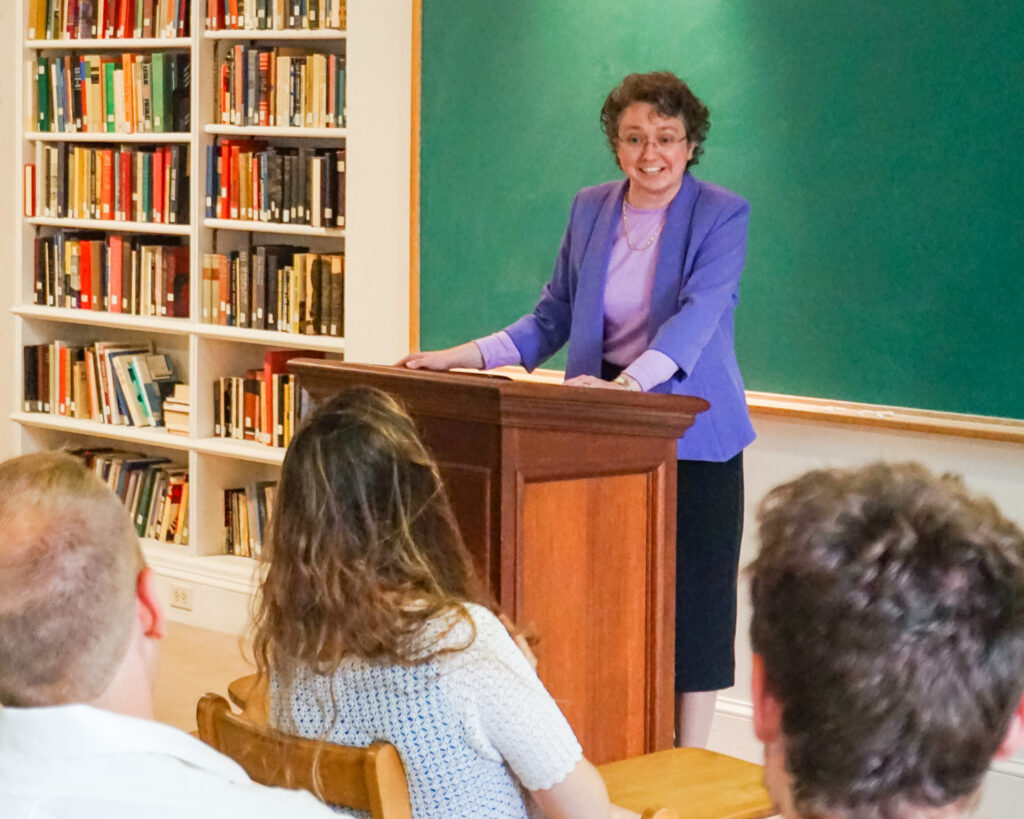
Following the most conservative interpretation of the Bylaws, however, the votes were understood as not yet final or in effect; several more days would need to pass by before each Trustee would be required to ratify and certify their vote in writing. “Again, seven of the fifteen Trustees are lawyers,” remarked Dr. Fahey, “so this was no surprise to me. These are individuals who deliberate and act with exemplary prudence and care—perhaps excruciatingly so for someone not trained in the law.”
“The Board of Trustees approached this search with a deep sense of responsibility for the College’s mission and future,” said Andrew Cernota, one of the lawyer Trustees. While recognizing that at times the efforts exceeded what seemed strictly necessary, he ended by stating, “we worked together to evaluate candidates carefully through a professional, collegial, and systematic process,” but one he thought was characterized by balancing “seriousness, good-humor, and unity.”
Eighteen months had passed since President Fahey’s first expressing his inclination to step down, nine months since the Executive Committee initiated its first plans, six months since the Board set to work; fourteen prospects had been considered, three candidates selected, one elected.
After the unanimous consent of the Trustees was formally communicated in writing, the president-elect was given a period of time for prayer, reflection, and discussion with his family before offering his final decision. Within just over a week, that was accomplished.
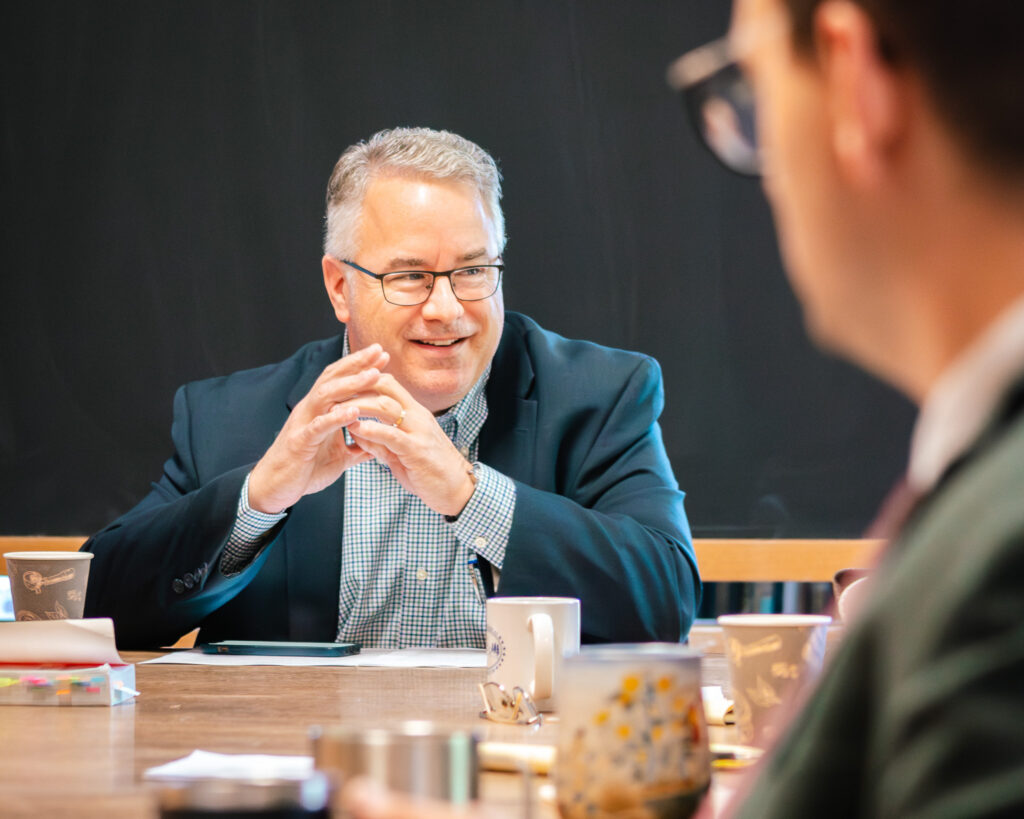
It is with great joy that the leadership of Thomas More College of Liberal Arts announces that the College’s fourth president will be Matthew Walz, Ph.D.
Tomorrow the College will provide a full biography of Matthew Walz.