After nearly two decades of service as President of Thomas More College of Liberal Arts, William Fahey announced that he will step aside as President, while remaining an active member of the College’s leadership and academic community.
Chairman of the Board of Trustees, Michael Gilleran, stated: “Dr. William Edmund Fahey became President of Thomas More College at a time of almost overwhelming challenges, and leaves the Presidency, after years of service and at a time of his own choosing, leaving a long record of success. TMC and its Board of Trustees overflow with gratitude.”
Trustee Andrew Cernota remarked: “Under President Fahey’s leadership, this institution has experienced nothing short of a renewal. At a moment when its future was uncertain, he brought disciplined stewardship and clarity of mission that restored financial stability and renewed confidence in the College’s path forward. Just as importantly, he has strengthened its deepest purpose: forming young men and women in a vibrant Catholic intellectual tradition. Today the College stands not only on sound financial footing, but as a living community of faith and scholarship—where rigorous academic inquiry is united with the moral and spiritual formation that has long defined the best of Catholic higher education.”
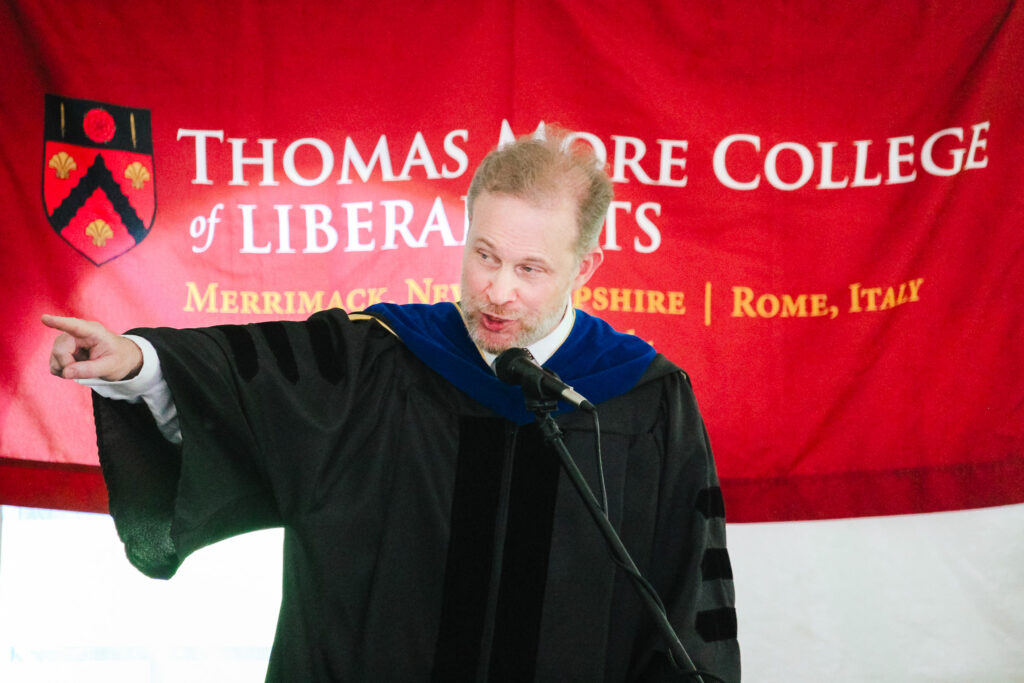
William Fahey, who began at the College in 2007 as Provost, has served as President since the Spring of 2009 and is among the longest-serving presidents within the community of institutions associated with the Cardinal Newman Society. His tenure far exceeds the current national average administrative lifespan of a college president—now approximately five and a half years. Dr. Fahey attributes his longevity to the inspiration he has drawn from the College’s students and the trust placed in him by supporters and partners of the institution.
Reflecting on the past years, Dr. Fahey expressed gratitude for the growth and stability achieved during his presidency. Today, the College stands on what he describes as its strongest footing—financially, structurally, academically, and morally. “That was not me. I had spent a full year reading the correspondence of founder Peter Sampo and working with Jeff Nelson on implanting new ideas. Both previous presidents had dynamic visions. I saw my work as harnessing the good of each and building on that. And most importantly, I have not been alone, but have had a wonderful team of friends and colleagues.”
Dr. Fahey will remain at the College as a faculty member and will continue in a leadership role overseeing several initiatives of strategic importance. “My scholarship has largely been on hold for years. I have been blessed never to stop teaching. I look forward to a fresh lease on my vocation. I look forward to restoring my home garden and spending more time with my family.”
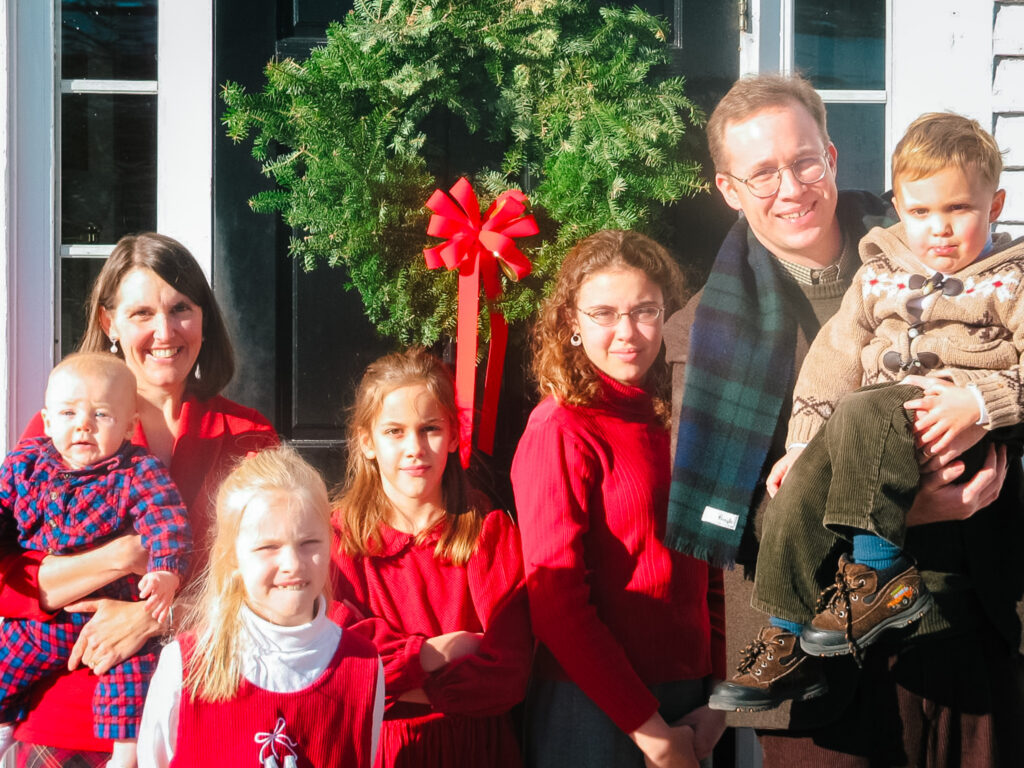
When Dr. Fahey assumed the presidency, the College faced significant challenges. Enrollment stood at just 39 students, the institution had no endowment, and long-term debt and deferred maintenance approached $5 million. Questions were raised about the viability of a small Catholic liberal arts college in New England, with some even speculating about the institution’s ability to maintain accreditation.
Under Dr. Fahey’s leadership, the College experienced a dramatic transformation. Enrollment has reached the campus’s capacity, the endowment has now surpassed $5 million, and all long-term debt has been eliminated. The College has also received recognition from organizations across the higher education landscape, including the American Council of Trustees and Alumni, Young Americans for Freedom, and the Cardinal Newman Society. The institution continues to hold accreditation from the New England Commission of Higher Education and the American Academy of Liberal Education.
Over the past decade, the College has expanded and strengthened its academic offerings by maintaining a distinguished faculty, introducing disciplinary concentrations, establishing an associate degree program for students discerning professional careers outside the liberal arts, and developing a growing number of internship opportunities.

Beyond the classroom, the College has broadened its engagement with the wider community. Initiatives launched during Dr. Fahey’s presidency include the creation of the Thomas More College Press, the establishment of a Center dedicated to hosting conferences and distinguished speakers, and the expansion of the College’s Rome program to welcome students from peer institutions.
Through the generosity of a benefactor, the College also established a permanent Visiting Scholars Program named for St. John Henry Newman. Built around a permanent endowed fund, the program has enabled the College to host dozens of speakers, emerging scholars, and distinguished academics, and will continue to enrich the intellectual life of the institution for years to come.
The College has also invested more than $2 million in campus infrastructure in recent years, restoring historic facilities and expanding its footprint. Among the most significant developments was the acquisition of the 27,000-square-foot beaux-arts property known as Mercy Hall. In a major milestone announced earlier this year, the New Hampshire Department of Education granted Thomas More College the authority to confer graduate-level degrees.
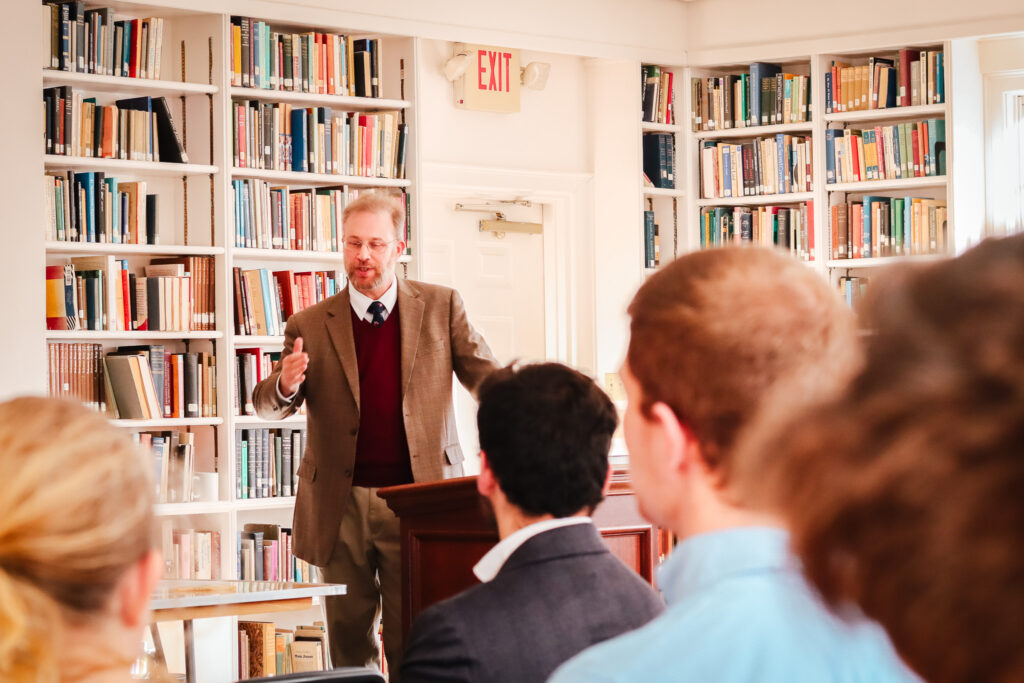
Dr. Fahey has consistently emphasized that the College’s greatest source of hope and renewal has been its students. Throughout his presidency, he has often spoken of their intellectual curiosity, moral seriousness, and commitment to faith. “Many pundits portray higher education in pessimistic terms,” Dr. Fahey remarked. “I know there are grave problems in America, but when I look to the kinds of students who come to TMC, I am inspired. I always have been. Like many at the College, the sacrifices we make to support the place are driven by the vision of hope these young men and women provide.”
One of the most visible developments during Dr. Fahey’s tenure has been the renewal of the College’s chapel and sacramental life. Early in his presidency, the entire campus was blessed and consecrated to the Sacred Heart of Jesus. A new altar was crafted by the grandfather of a student (T.J. Pia ’10), and under the guidance of the College’s Artists-in-Residence (David Clayton and Gwyneth Thompson-Briggs), the chapel was transformed through a combination of new sacred art and restored items salvaged from historic churches. Today, the College is served by a vibrant community of clergy—including Benedictine monks, priests of the Priestly Fraternity of St. Peter, a Carmelite priest, and clergy from several dioceses—who celebrate Mass and administer the sacraments throughout the week.
Looking ahead, Dr. Fahey believes the College has reached not only a moment of stability but one of exceptional strength and opportunity. “I stepped into the breach utterly green, but with a glimpse of the future. In prayer, even at the most perilous times, I was left with a sense that all would be well. The trials have been real, but I feel that God has directed the affair and blessed me and all my friends and colleagues here through the years.”
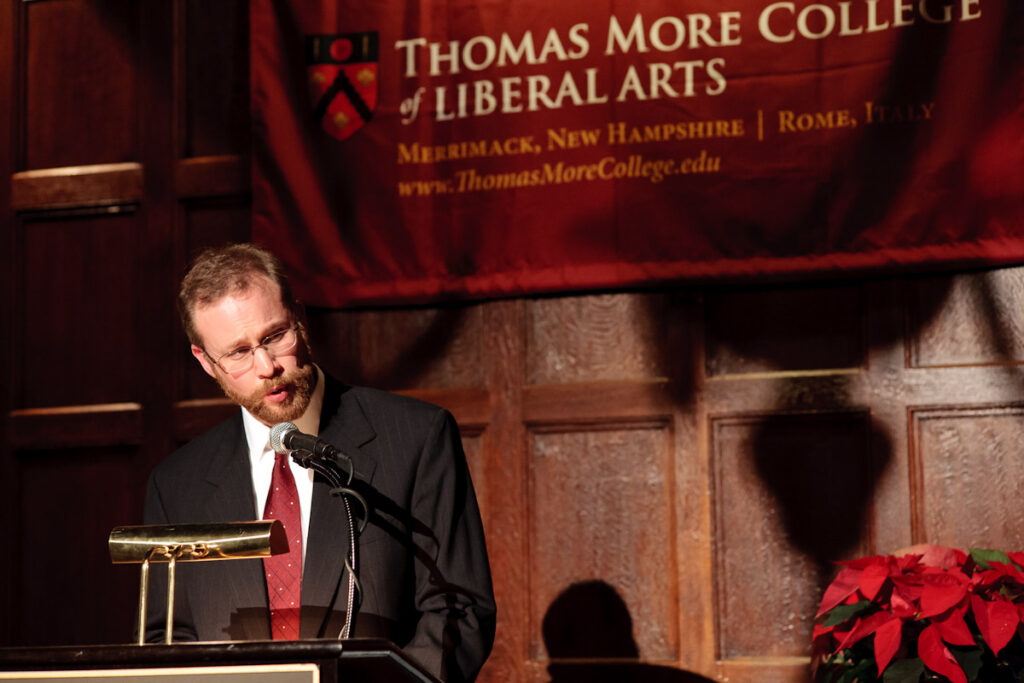
Dr. Fahey was appointed president on April 23, 2009—“The Feast of St. George and Shakespeare’s date of birth and death,” he noted. “That was a hard spring. But the day Pat Monaghan chose to walk me to the dining hall and inform the student body I was at the helm communicated a kind of significance to me that, again, I took as a sign of trust and confidence … and trials.”
When asked why he is stepping aside, Fahey noted that he has “surpassed the normal shelf life of a president.” He then added, “Only at a place like Thomas More College and with the friends I have had in the faculty, staff, and Board, could I have been trusted to start so many initiatives, experiment with ways of enlivening the tradition—the Guild Program, a sailing program, increasing our study-abroad opportunities, the Press, the Center, and I have never been asked to cease teaching. I have benefitted from these years, but it is time. Time for another renewal and new leadership. Time for me to throw my energy into some of these initiatives that need attention. Seasons change and that is good.”
The Board of Trustees has appointed Dr. Fahey Chancellor of the College with a mandate to represent the College in scholarship and to oversee mission-aligned programs. Trustee and alumna Maureen Mooney ’97 remarked, “William Fahey has been a superb president of Thomas More College for the past 17 years. As the College turns a new page, it is encouraging to know that Dr. Fahey will remain a presence on the campus as a chief steward of its mission and vision. We are grateful for his commitment and frequent sacrifices to perpetuate an institution of higher learning that is loved by many.” And Trustee Michael Mulski added, “William has a much commented-upon air of Old-World gentility and gravitas—these are some of the qualities that made him an outstanding President and we know will remain as he continues to serve as a distinguished ambassador for the College.”
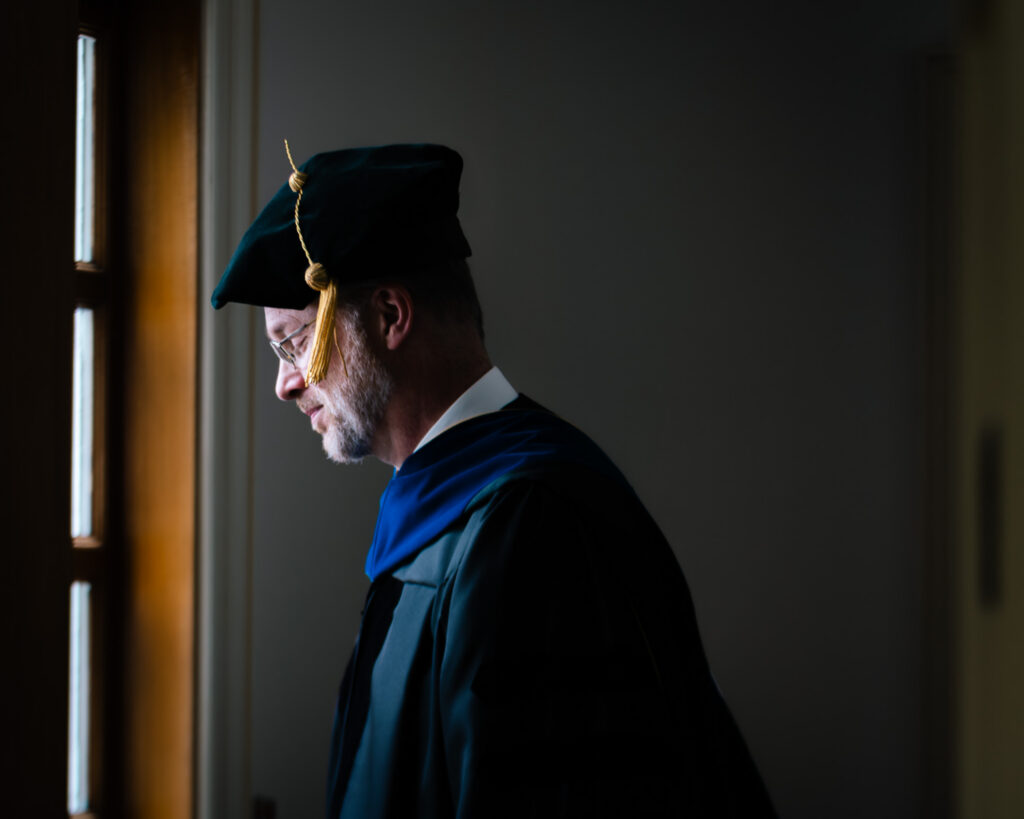
Musing over the highlights of his time as President, Dr. Fahey is overwhelmed. “There are too many milestones and moments, but if I had to pick one as emblematic, it would be how the College weathered the COVID years. We were the last college to close in New England; our students were on the last planes out of Rome—Tony Assaf stayed behind to make sure everyone made it. And the ongoing spirit of resolution! Jay Thompson getting the faculty to pivot to distance learning in less than two weeks; Denis Kitzinger creating an incredible system for health and safety; Paul Jackson and Pam Bernstein pulling out all the stops to keep the finances above water. And the students rose to the occasion and soldiered it with almost no complaints. At the lowest moment, Dominic Cassella ’18 (then Director of Communications and Special Operations) and I produced a video on the Feast of the Incarnation—the only video I have ever made as President—it was my message of our reasons to remain hopeful. That is Thomas More at its best, to be an ambassador of hope.” (The video can still be viewed here).
As the College approaches its 50th anniversary, Dr. Fahey looks forward to supporting its continued growth through scholarship, teaching, and strategic leadership. He also expressed deep gratitude to the many friends and supporters whose generosity and trust have helped shape the College’s remarkable transformation over the past sixteen years. “Together,” Dr. Fahey said, “we have seen the College move from uncertainty to strength. We must never forget that our strength is in the Lord. With that, Providence holds even greater possibilities.”
Tomorrow the College will describe the presidential search and announce the next President of Thomas More College.
For further reading:
Smoke-Filled Rooms and Intrigue? Electing a College President